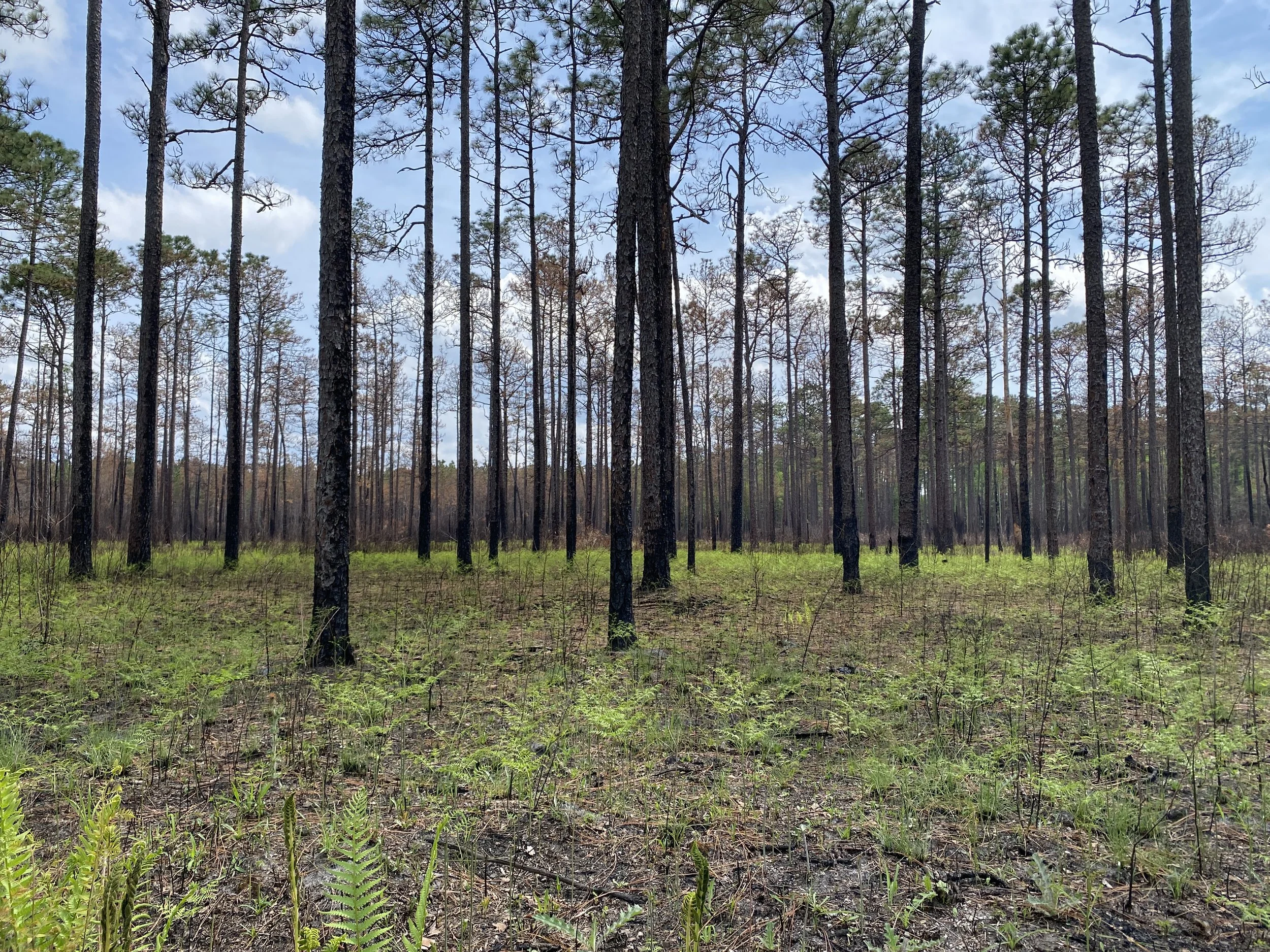
Small landscapes matter. When designed with care, they can support wildlife, manage water, and offer daily moments of beauty and calm. These spaces shape how we experience our homes and how our homes participate in the larger landscape beyond their boundaries.
My work explores this intersection between private gardens and the broader environment, showing how thoughtful design in small residential settings can contribute to something larger, benefiting both the land and the people who live with it.
SMALL SPACES, BIG IMPACT
Featured Project
Personal Garden | Frontyard| Living Laboratory
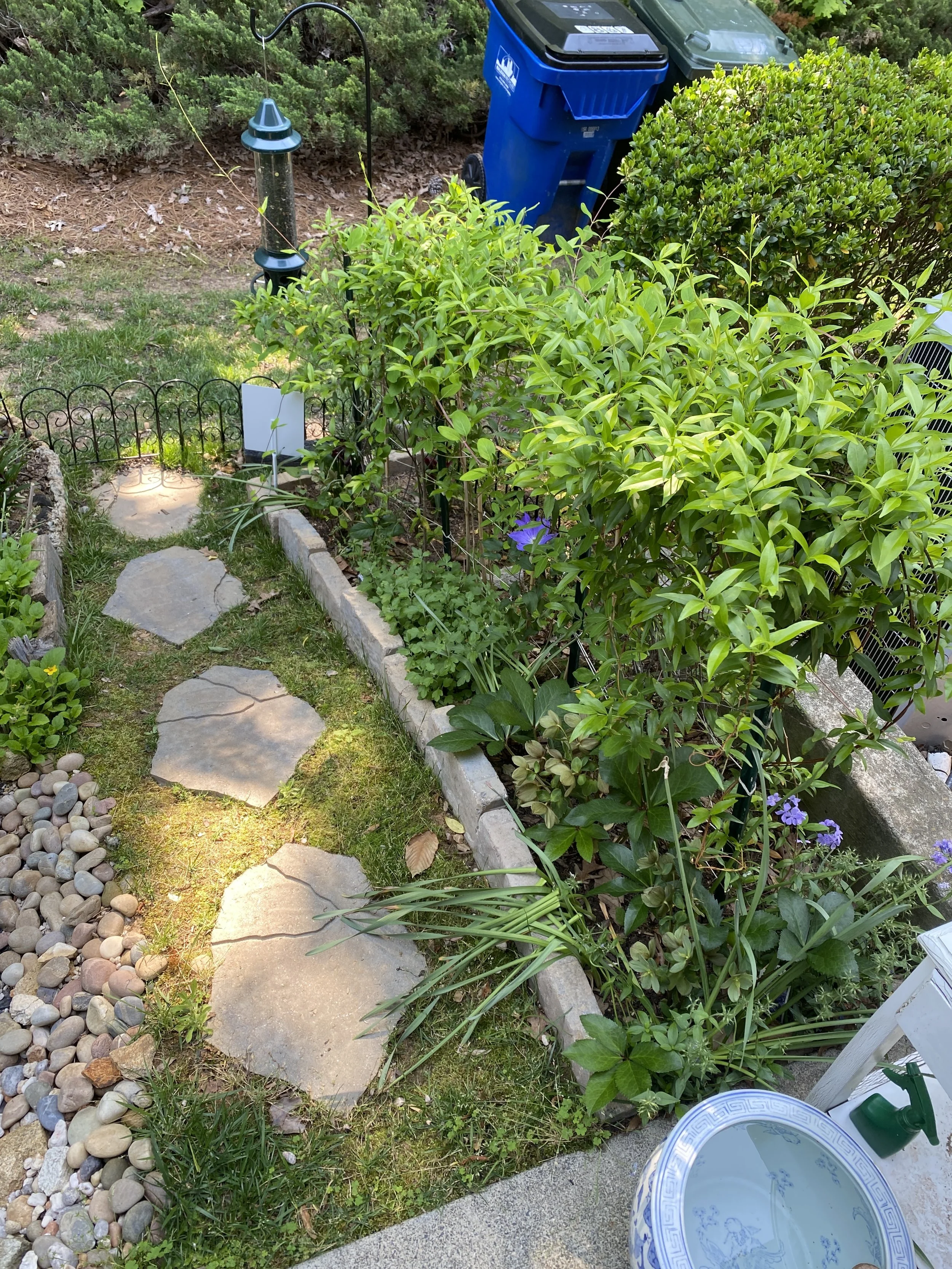
This garden serves as a living testing ground for my design philosophy. It allows me to observe how plant communities establish, change, and interact over time while responding to real site conditions. The space is intentionally evolving, with an emphasis on native plants, habitat creation, and stormwater infiltration.
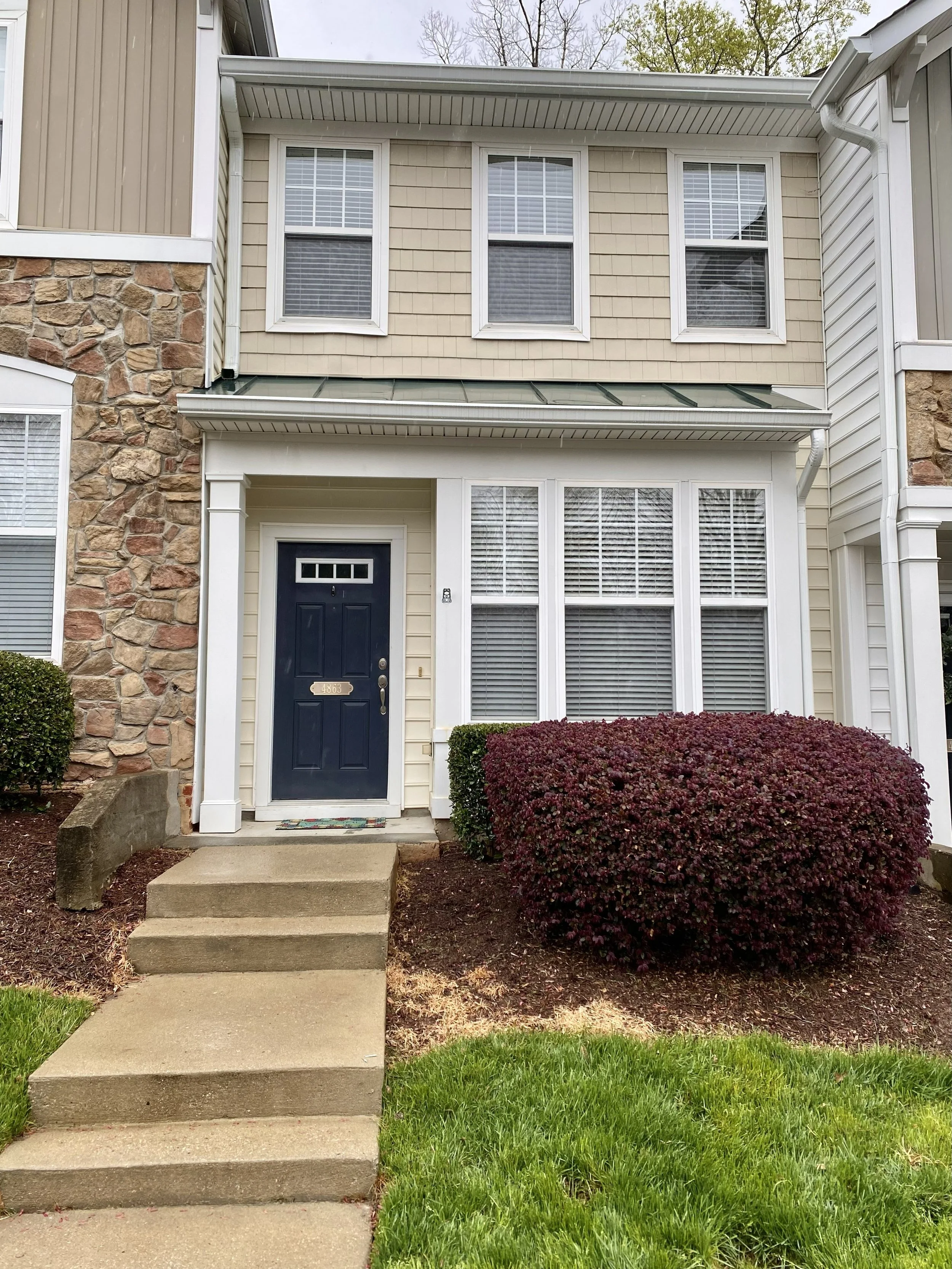
Taking Stock
Assessed existing foundation plantings and spatial constraints, including an overgrown Loropetalum and established Chinese holly, to understand structure, scale, and potential.
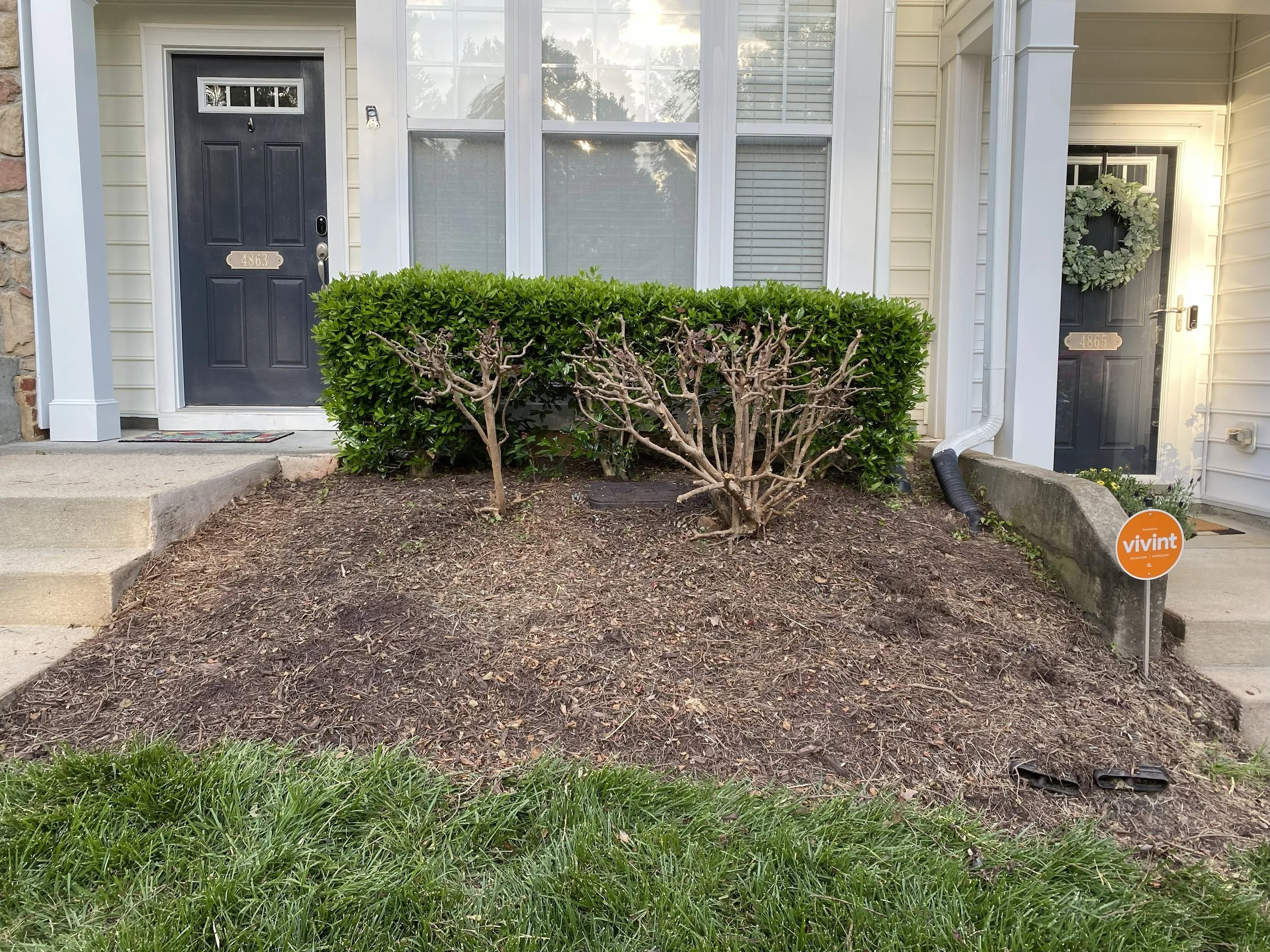
Starting Fresh
Started with a hard prune of the Loropetalum to see how much available space there was to work with. Eventually decided to remove the Loropetalum altogether.
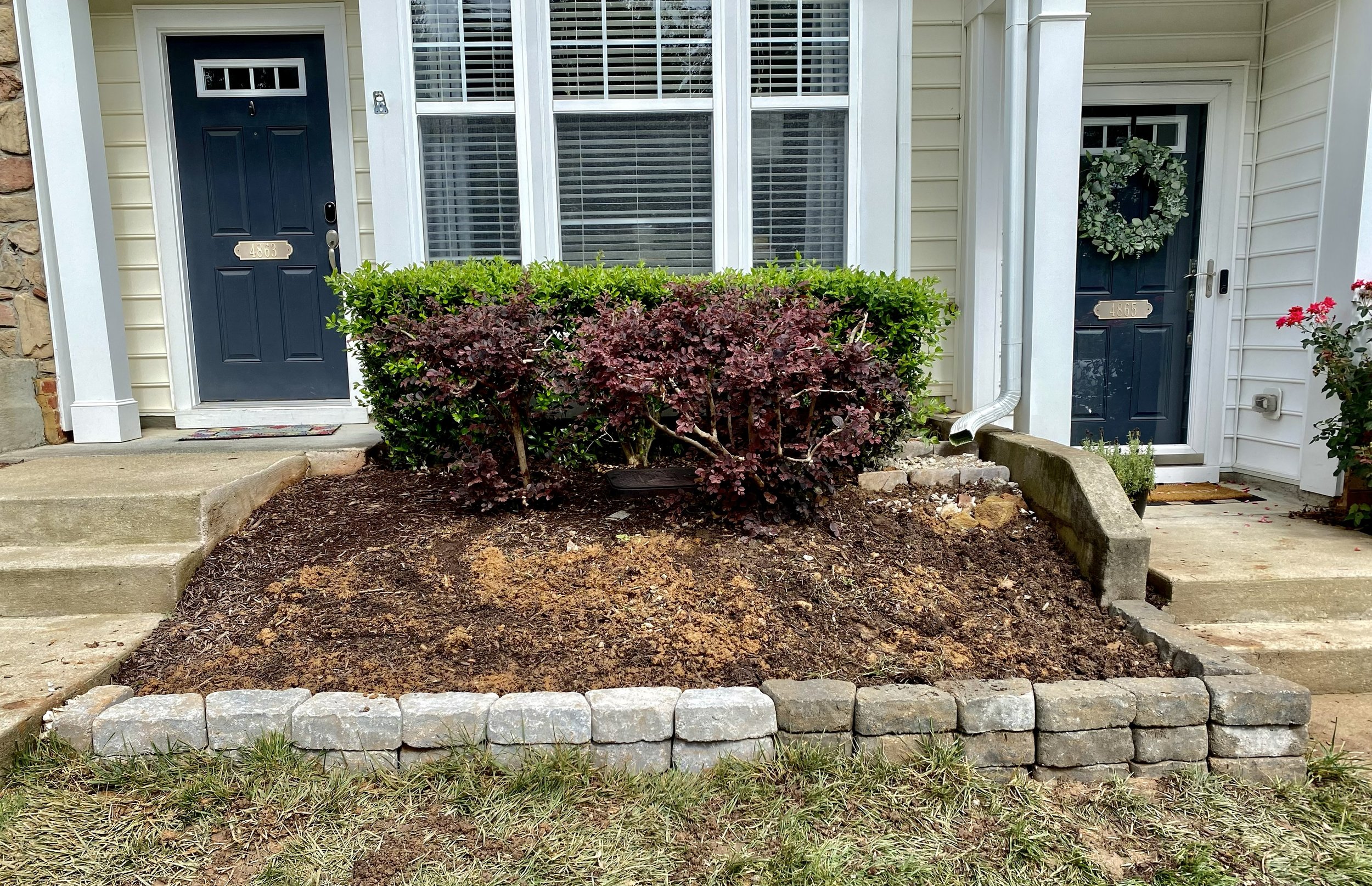
Adding a Border
Installed a retaining wall to help define the edge and keep the soil in place. Disconnected the downspout to help with stormwater infiltration, so it would no longer wash away mulch onto neighbors sidewalk.
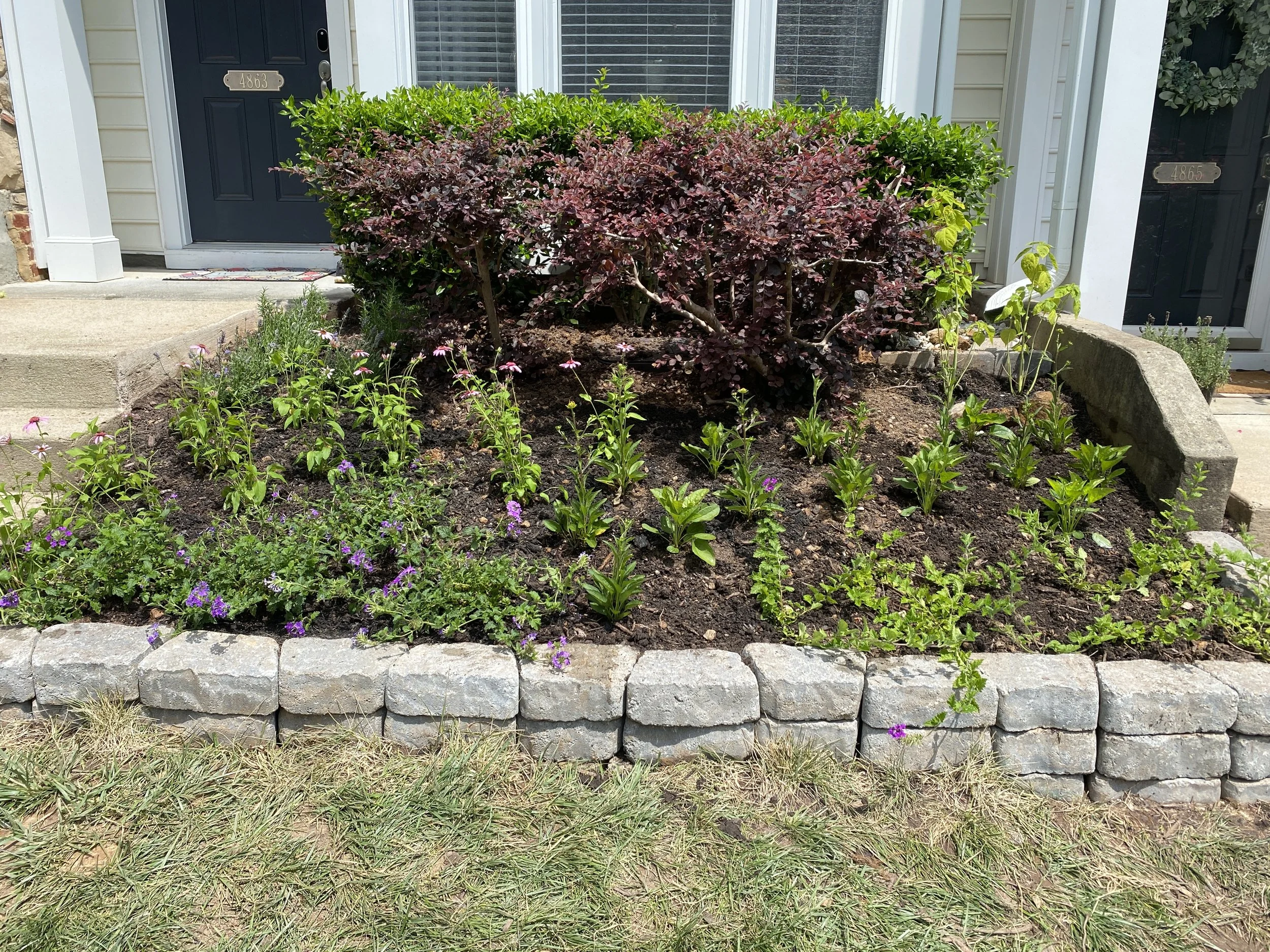
Installation Day
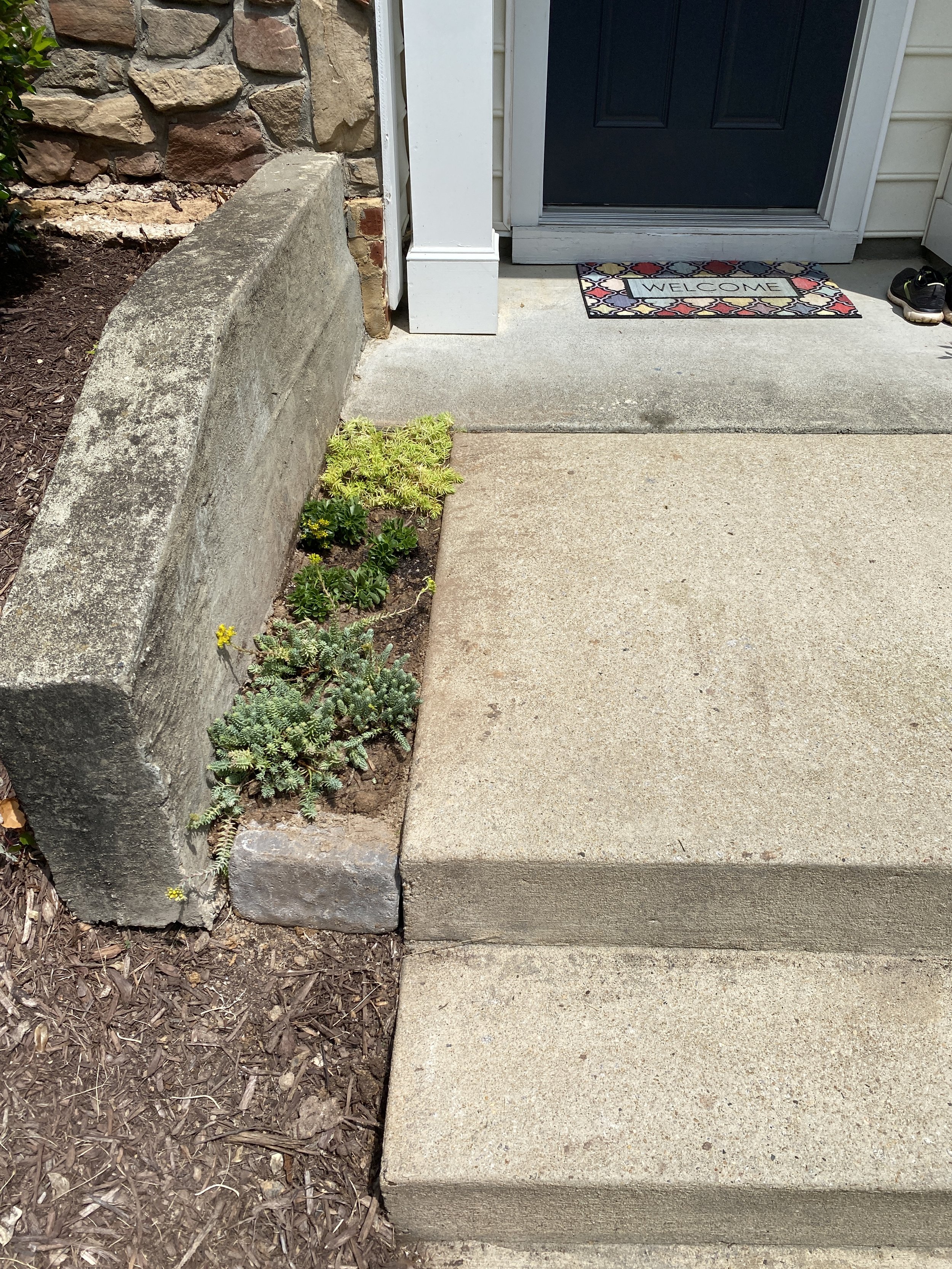
A diverse mix of plants went in all at once to fill the space quickly, protect the soil, and give wildlife somewhere to move and settle in.
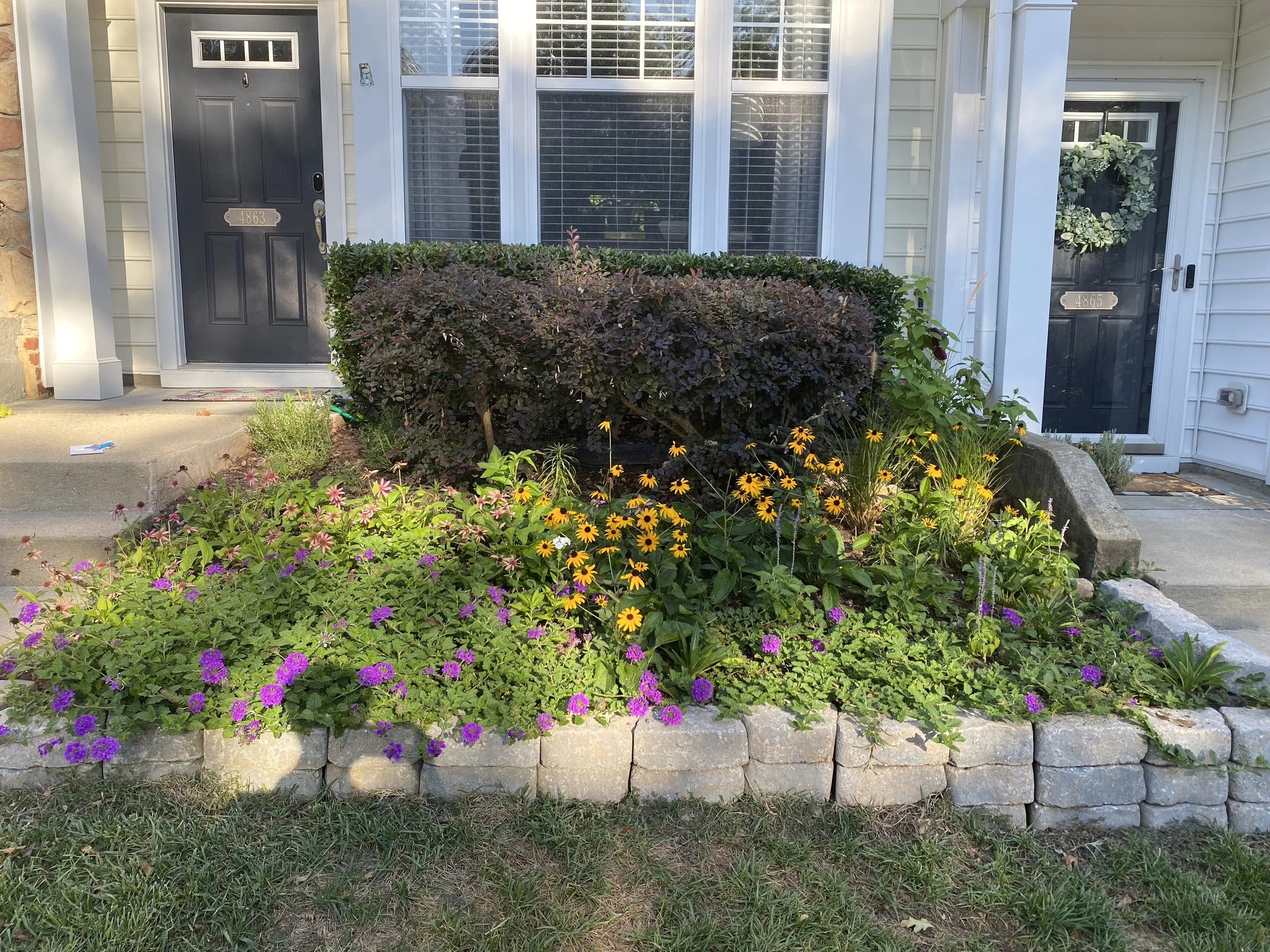
A Few Months Later
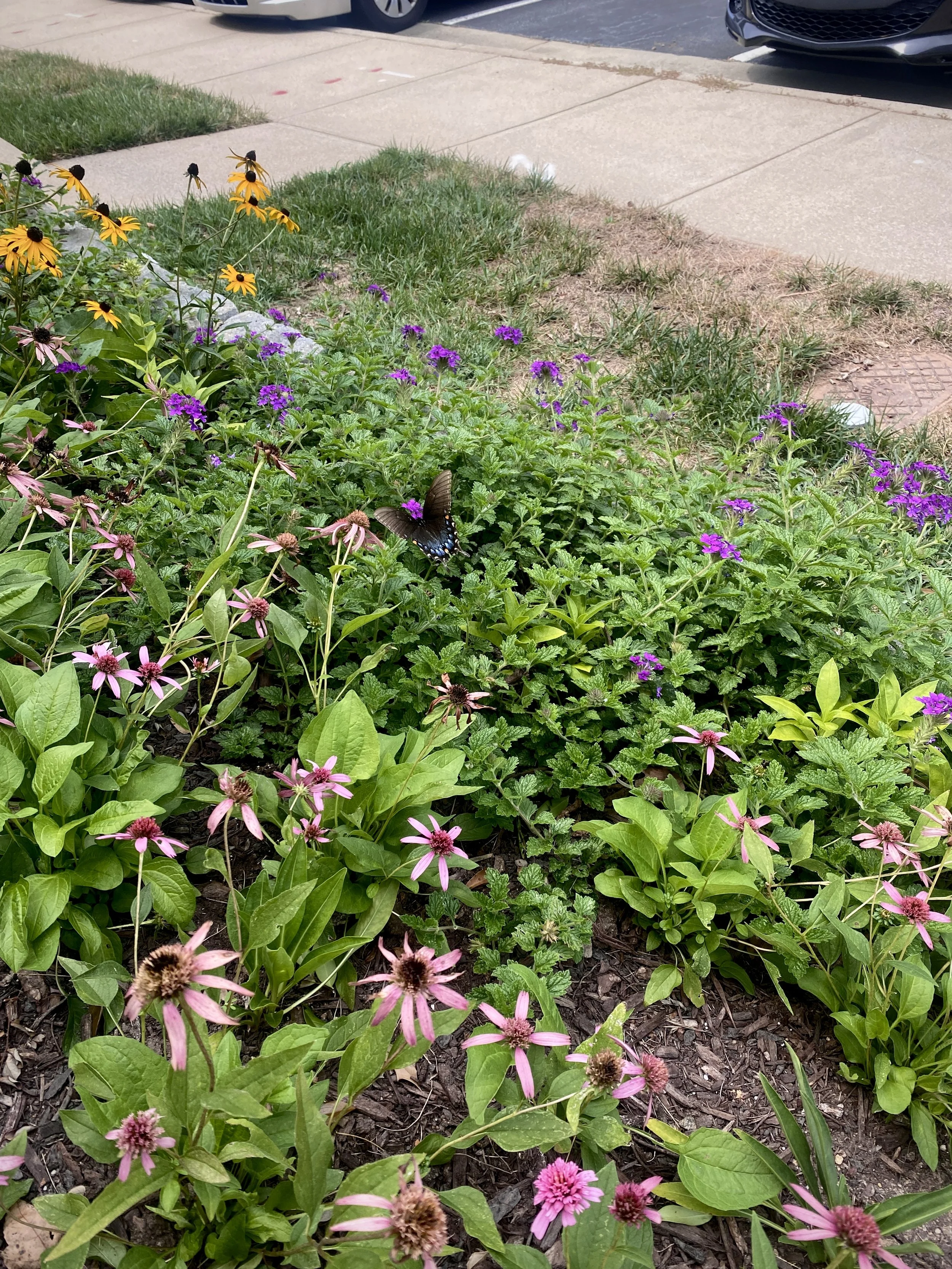
The plants have settled in well. Pollinators are already showing up, and runoff onto the neighbor’s sidewalk is no longer an issue.
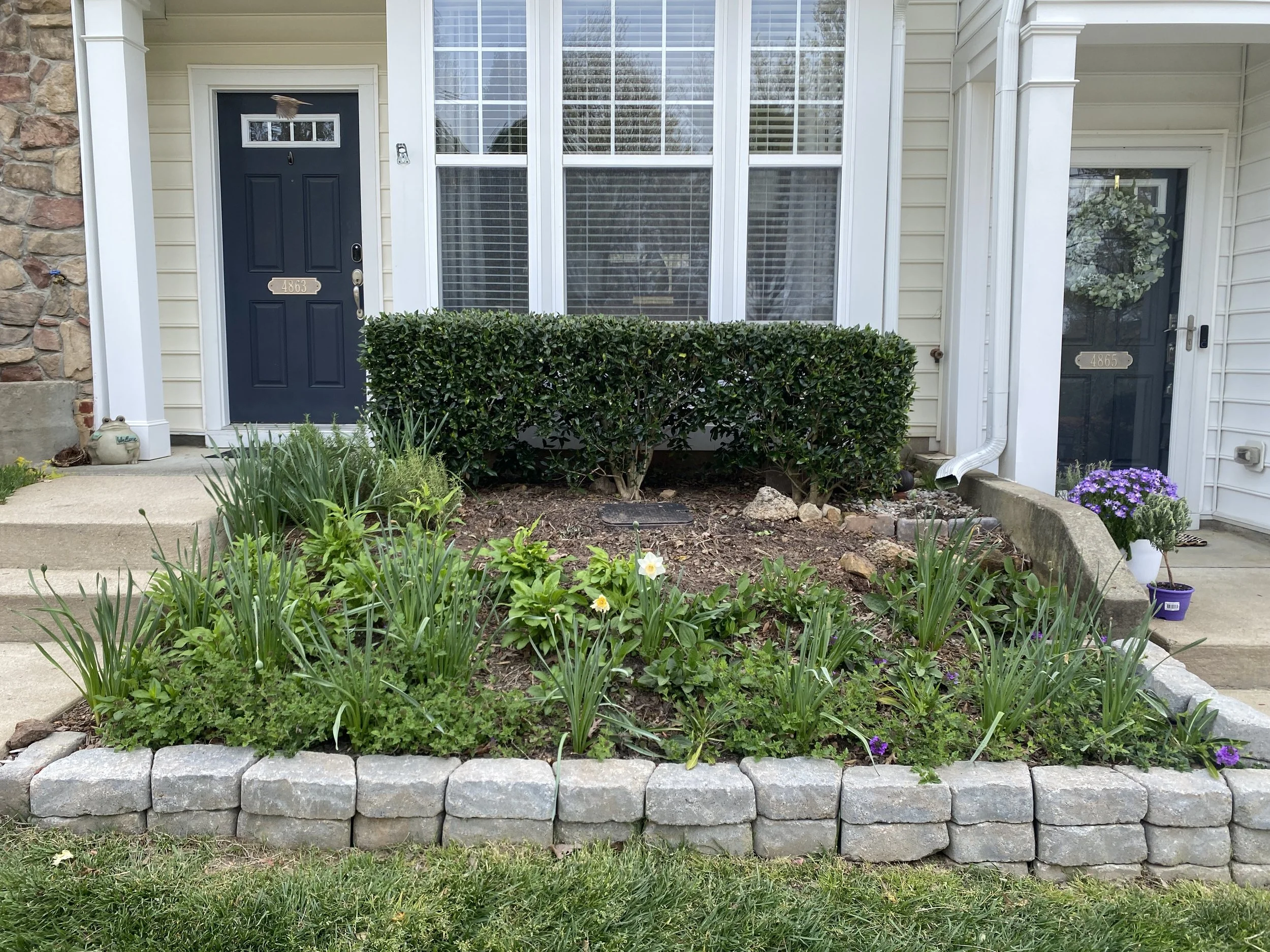
Shrub Removal
To add even more biodiversity, decided to remove the Loropetalum. It was much too large for the space and required constant trimming to keep it from overwhelming the other plants
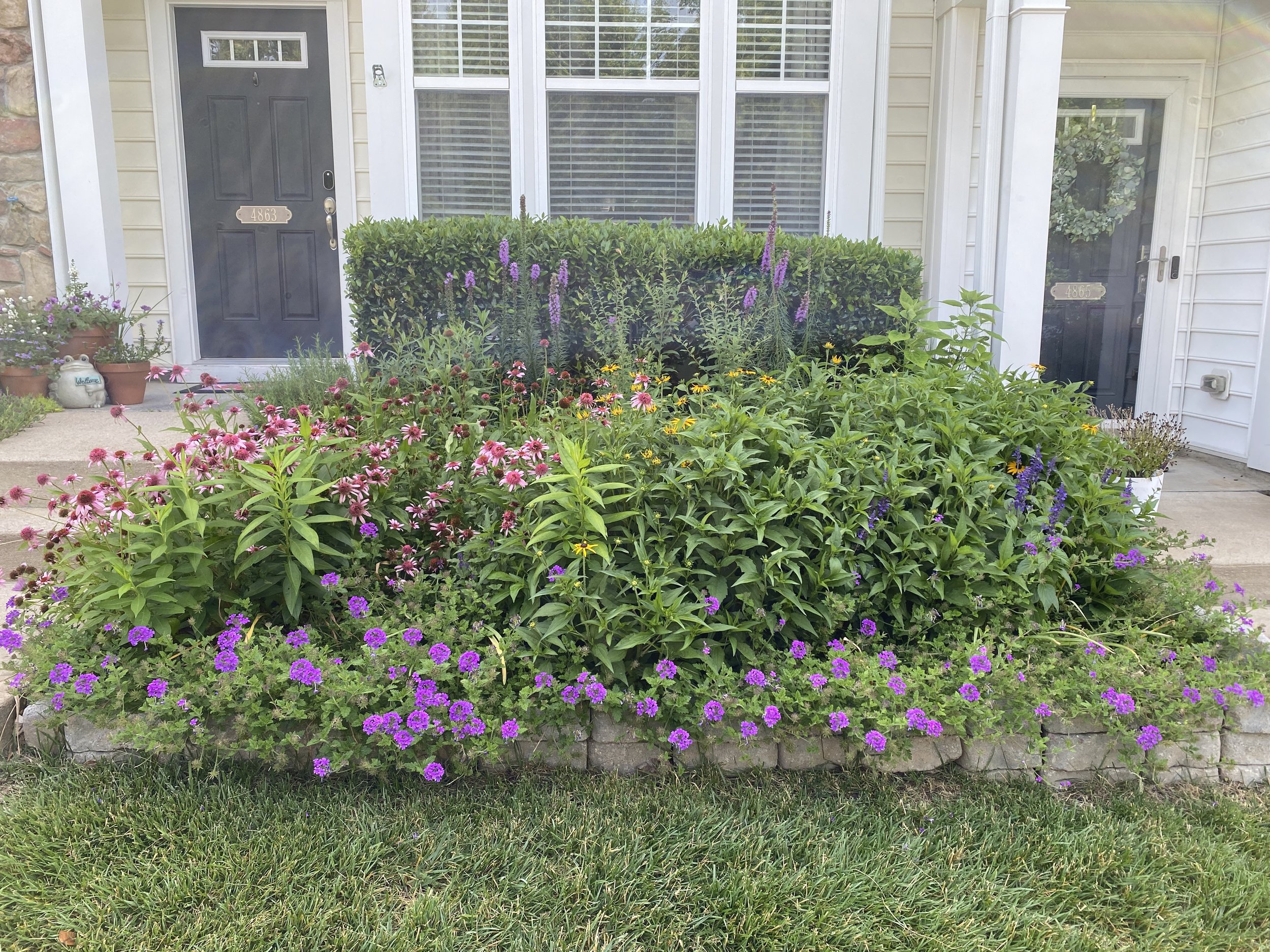
Letting it Fill In
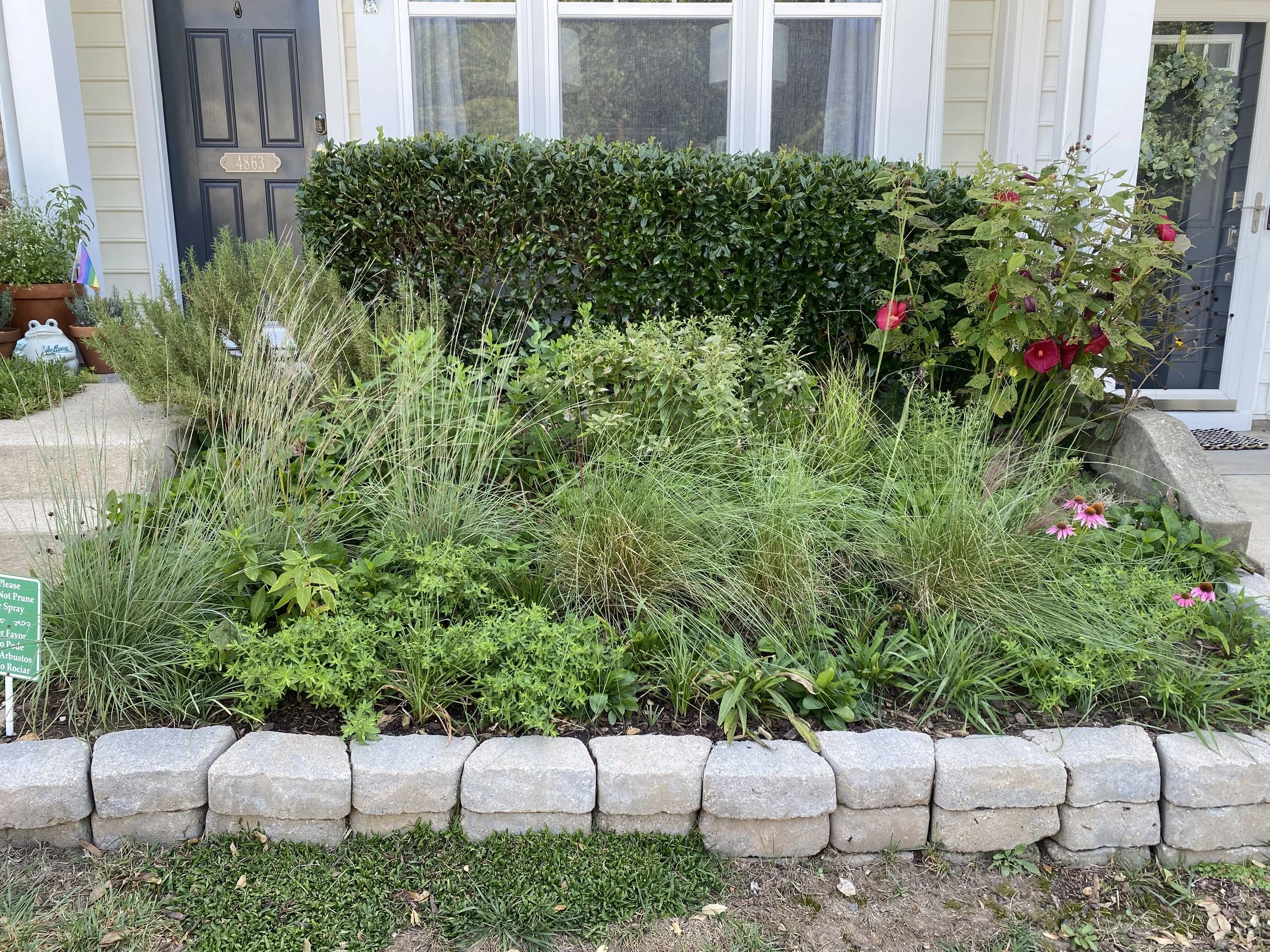
Added grasses for additional texture and winter structure as well as autumn blooming perennials to extend the bloom season for pollinators.
Personal Garden | Backyard | Living Laboratory
With the patio opening onto a wooded lot, the backyard was designed to feed and shelter wildlife while also managing roof runoff.
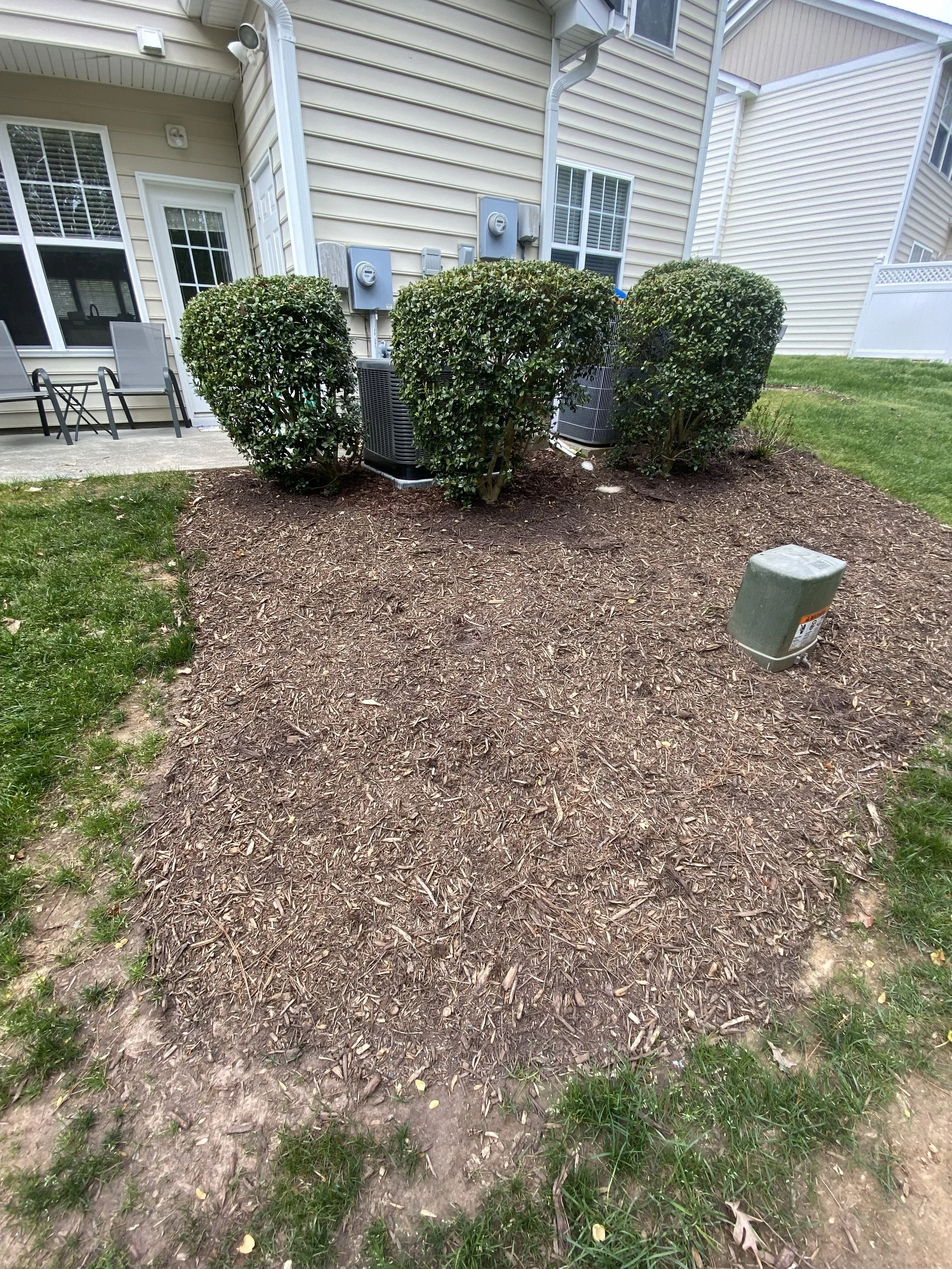
Taking Stock
Similar to the front yard, the backyard had only a few shrubs.
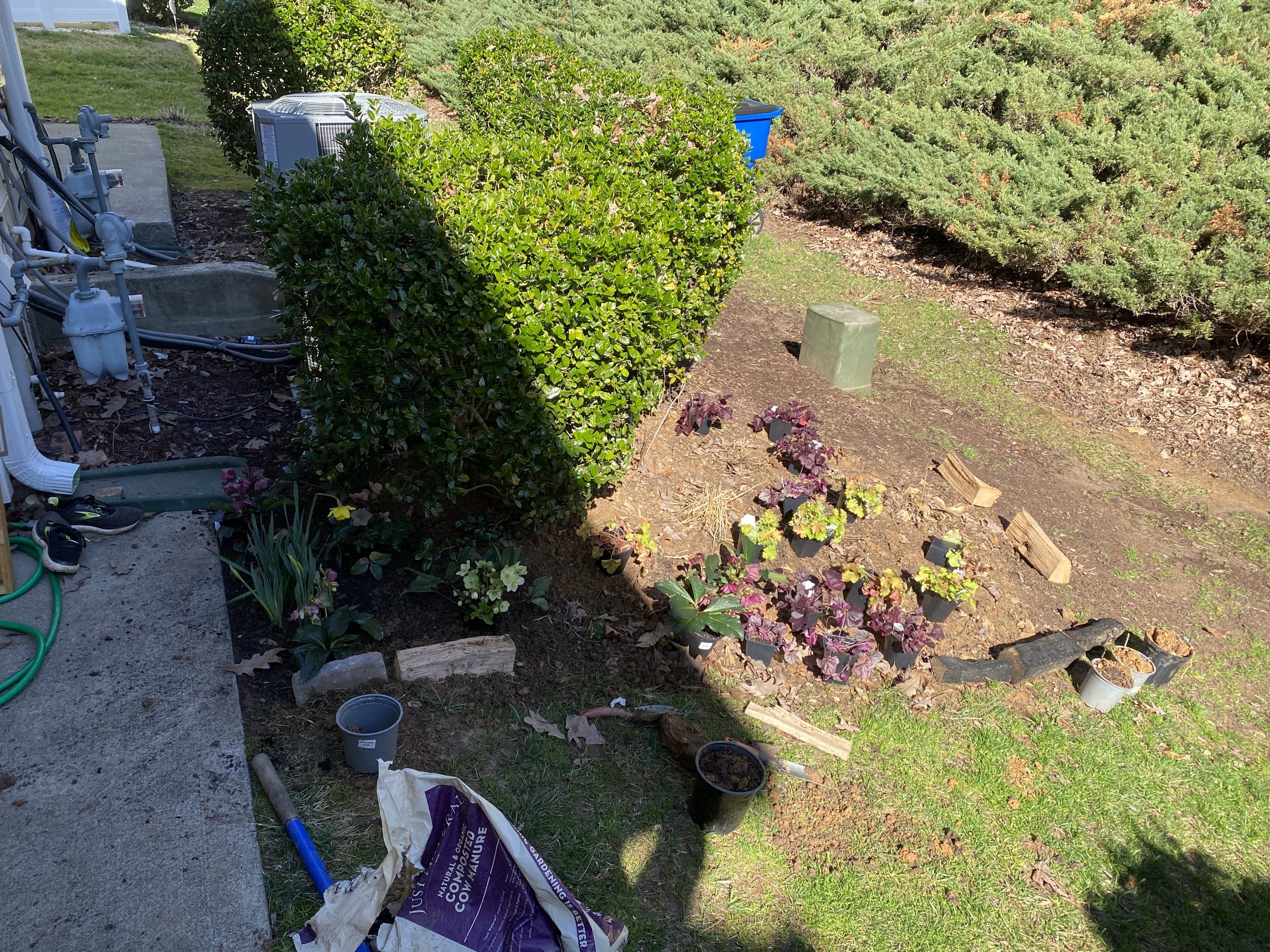
Starting Fresh
Utilizing some unused firewood, I created a temporary bed to help define the space and keep the landscaping crew from mowing over the plants. Fully intending to widen the bed later on.
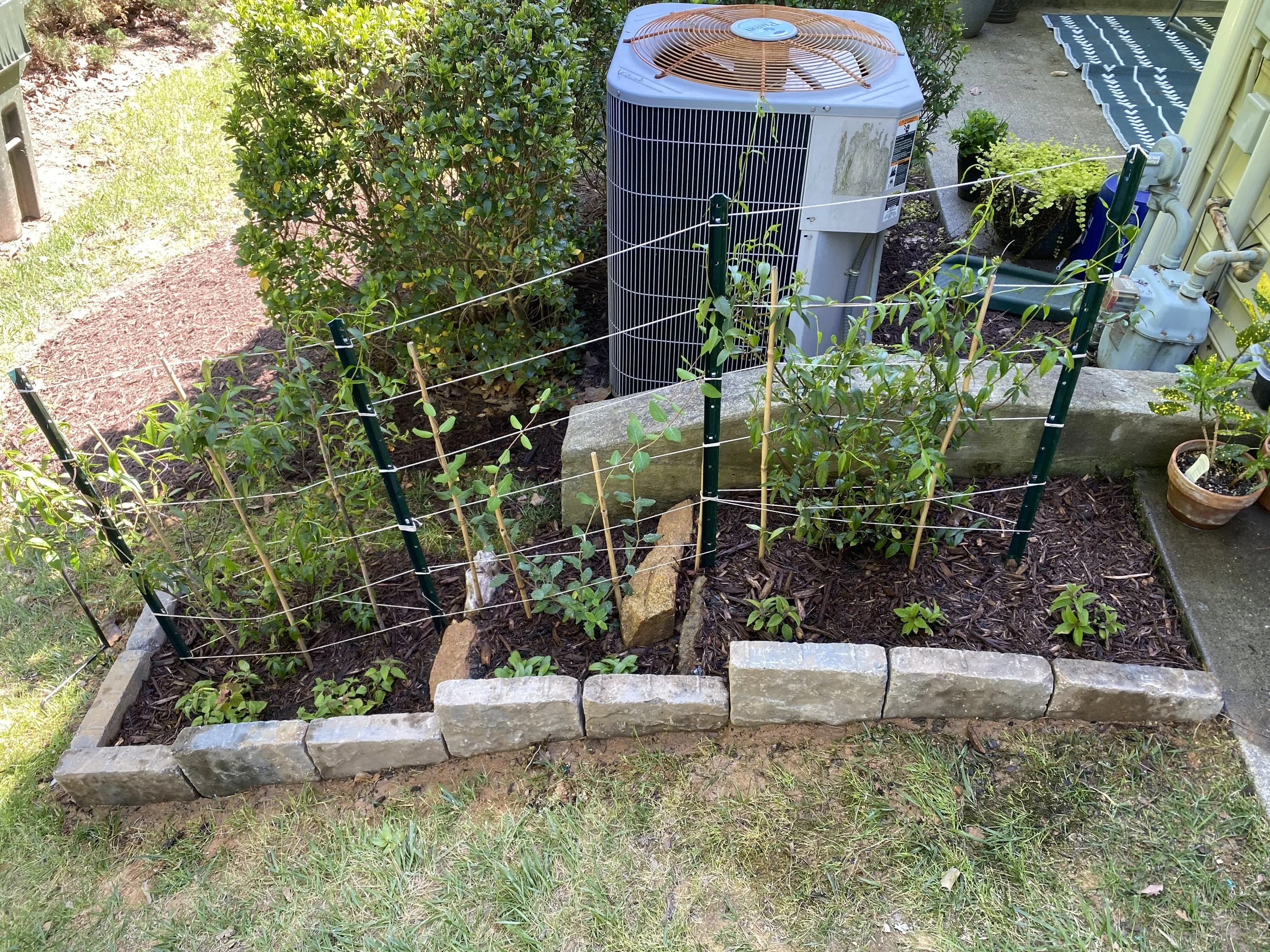
Screening Adjacent HVAC
The addition of climbing vines, a trellis, and a defined border help to bring unity to the space and block the neighboring HVAC unit.
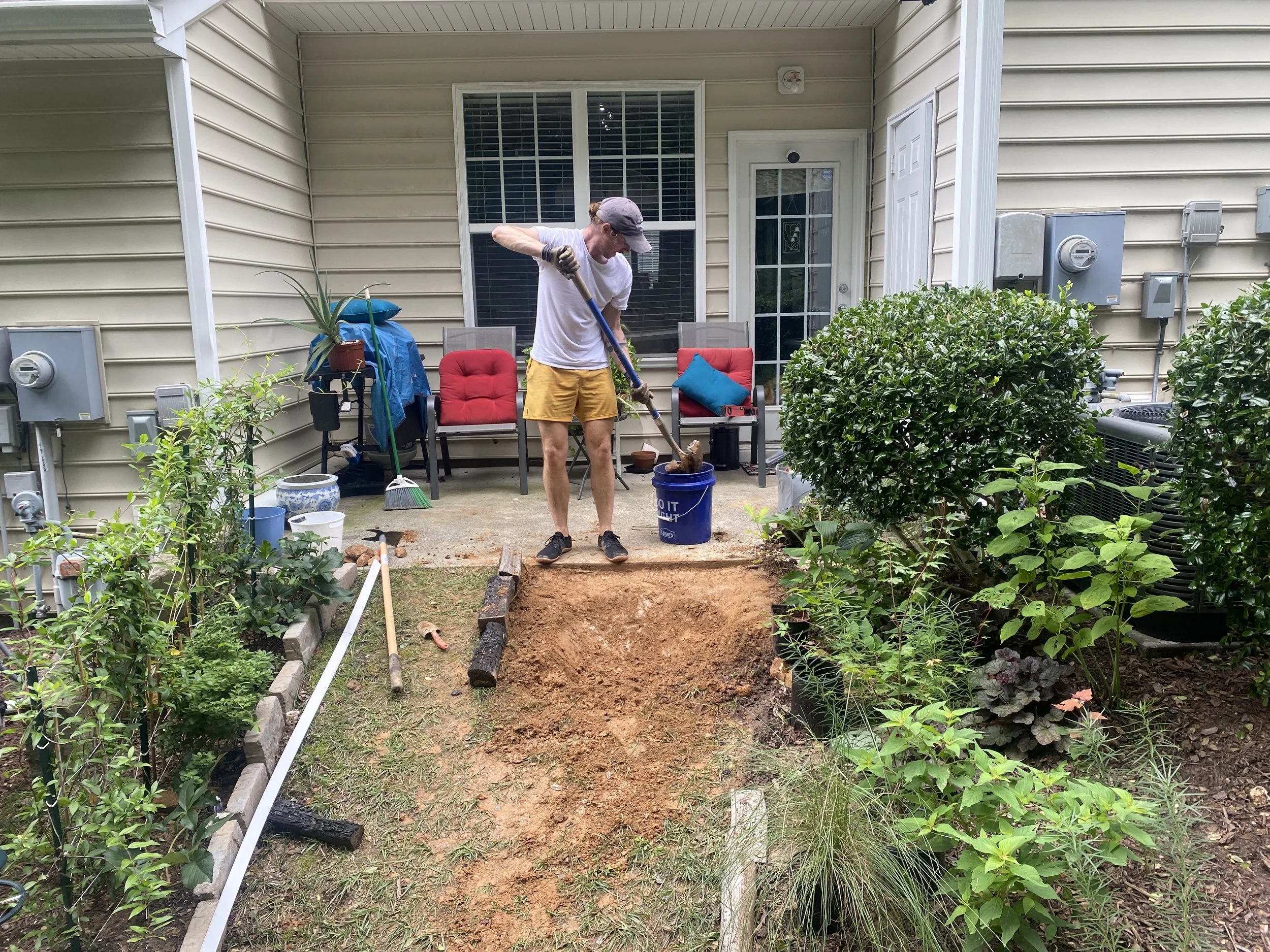
Building a Wildlife Pond
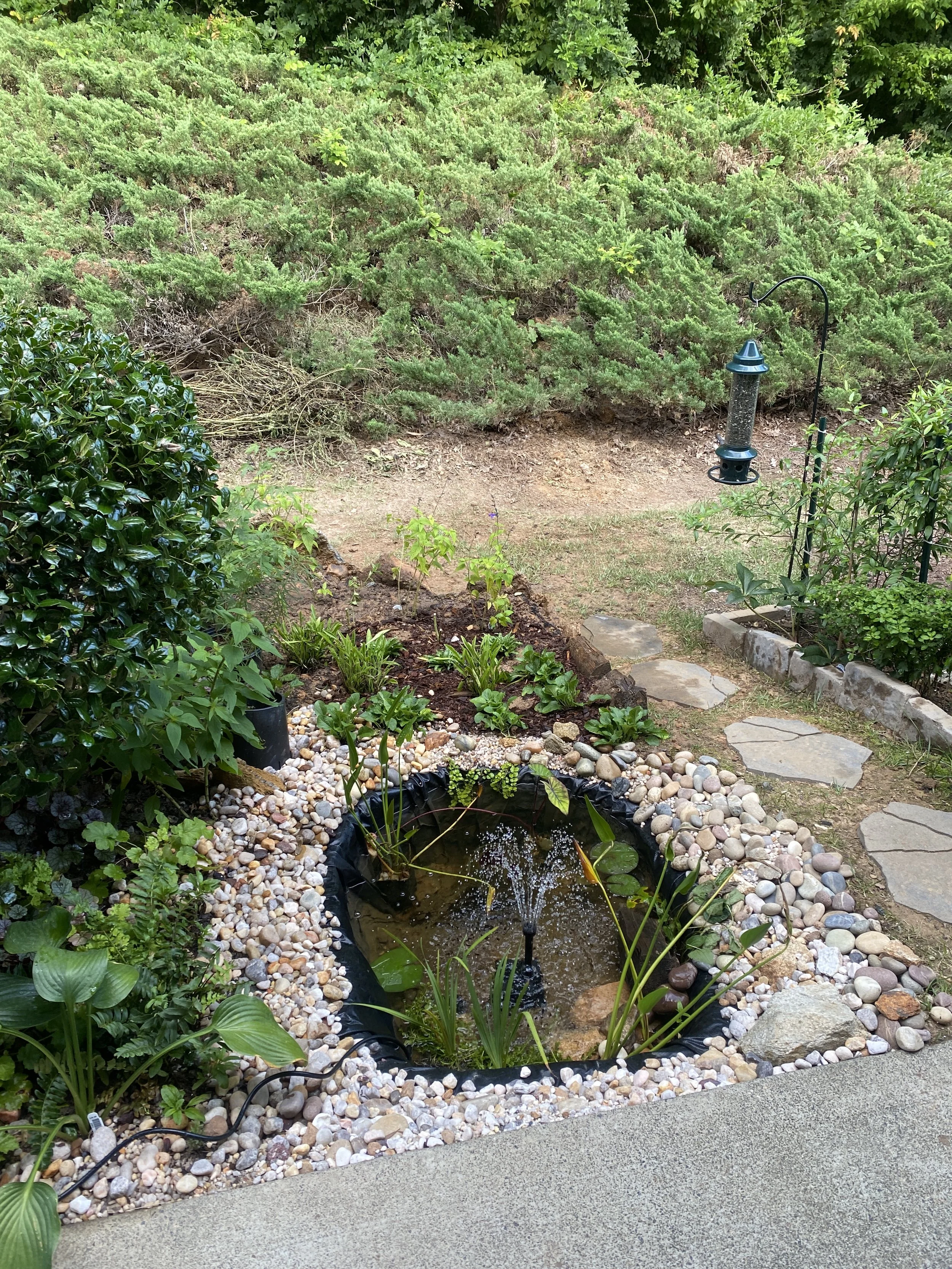
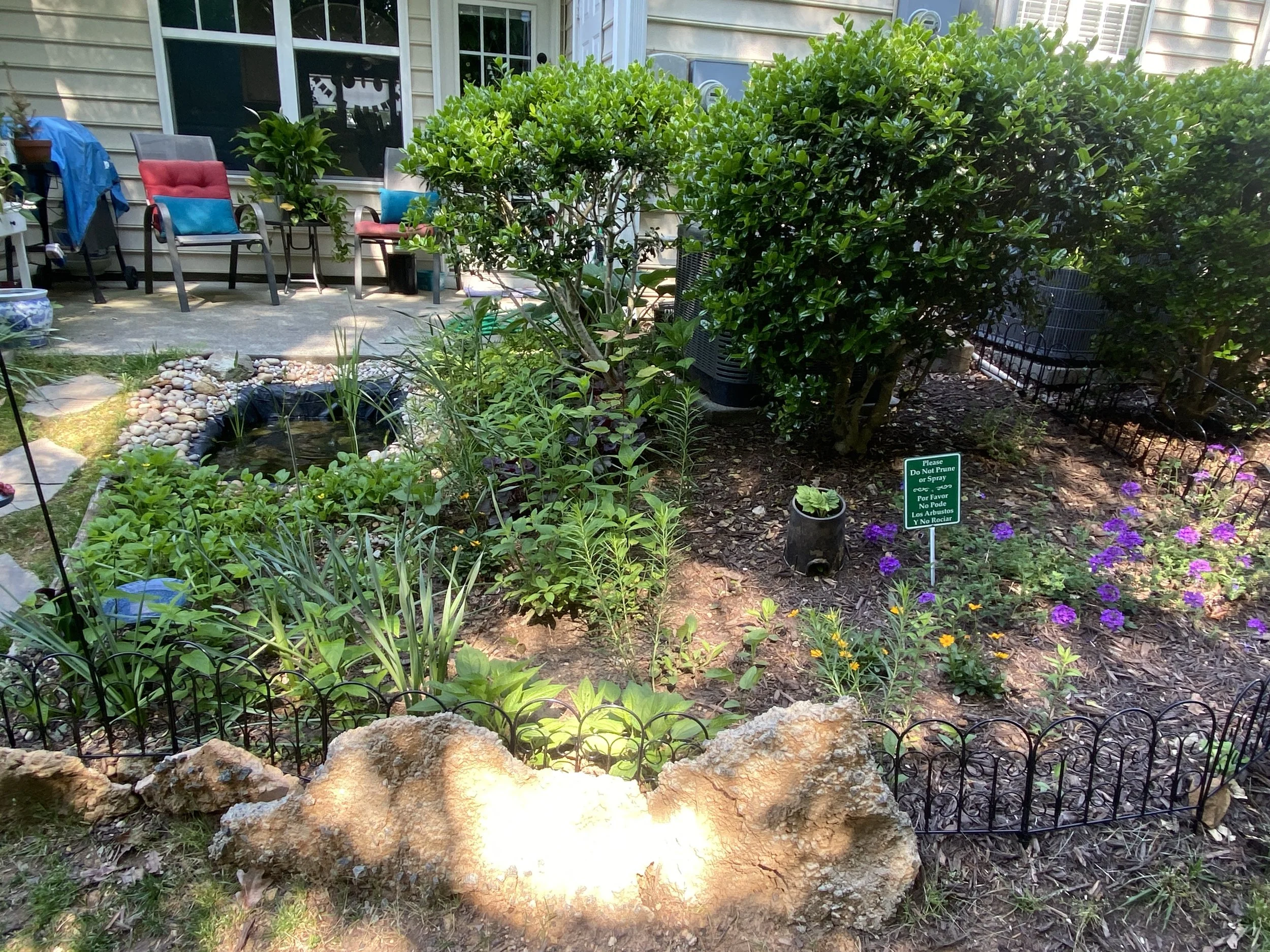
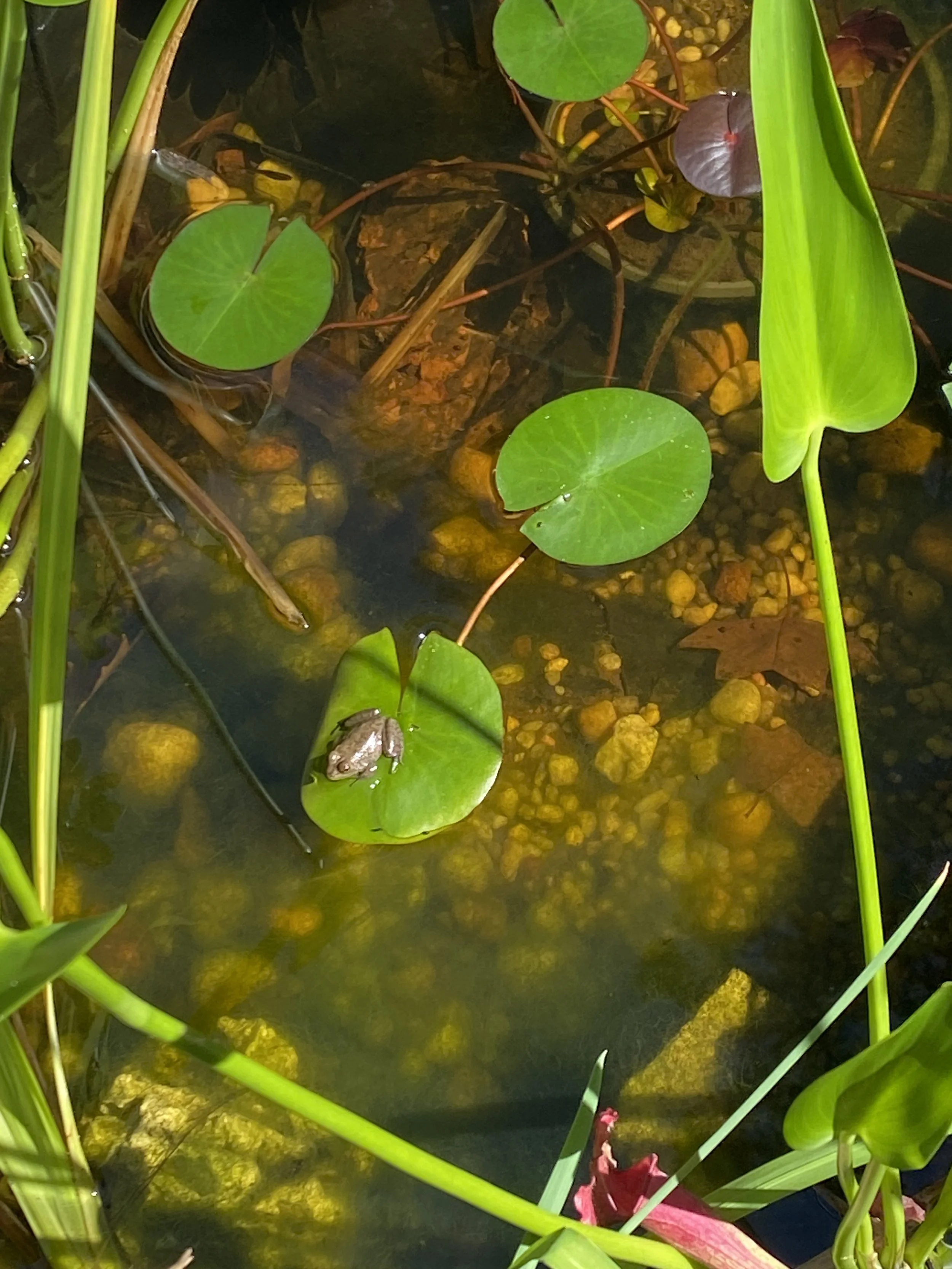
This small pond was built to provide a reliable water source and create habitat for frogs, dragonflies, and other wildlife that move through the yard. While digging, I uncovered old slabs of concrete and stone buried on site. Instead of hauling them away, they were reused to form the garden border around the pond, tying the feature back into the landscape and reducing waste.
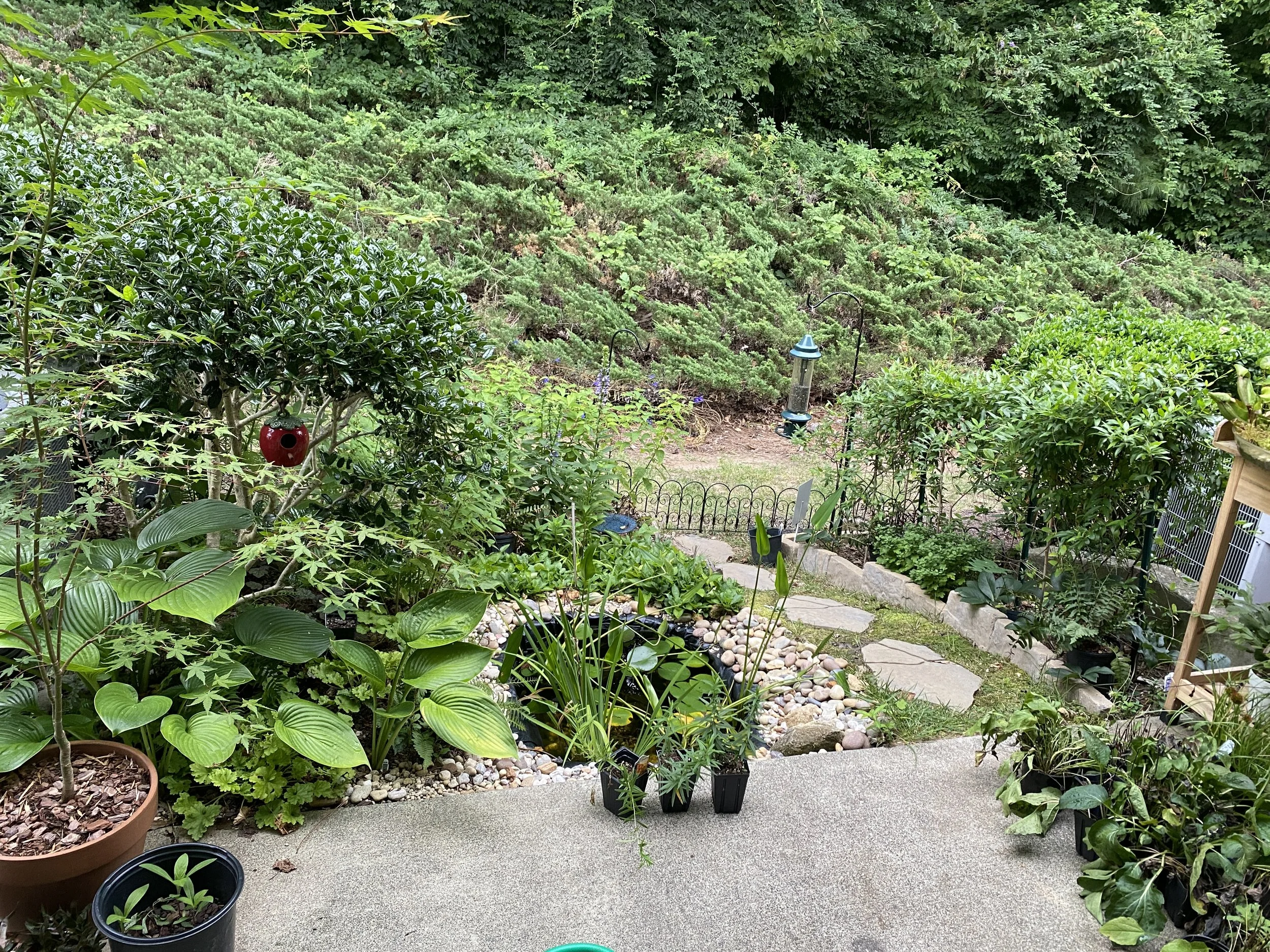
Now We Wait!
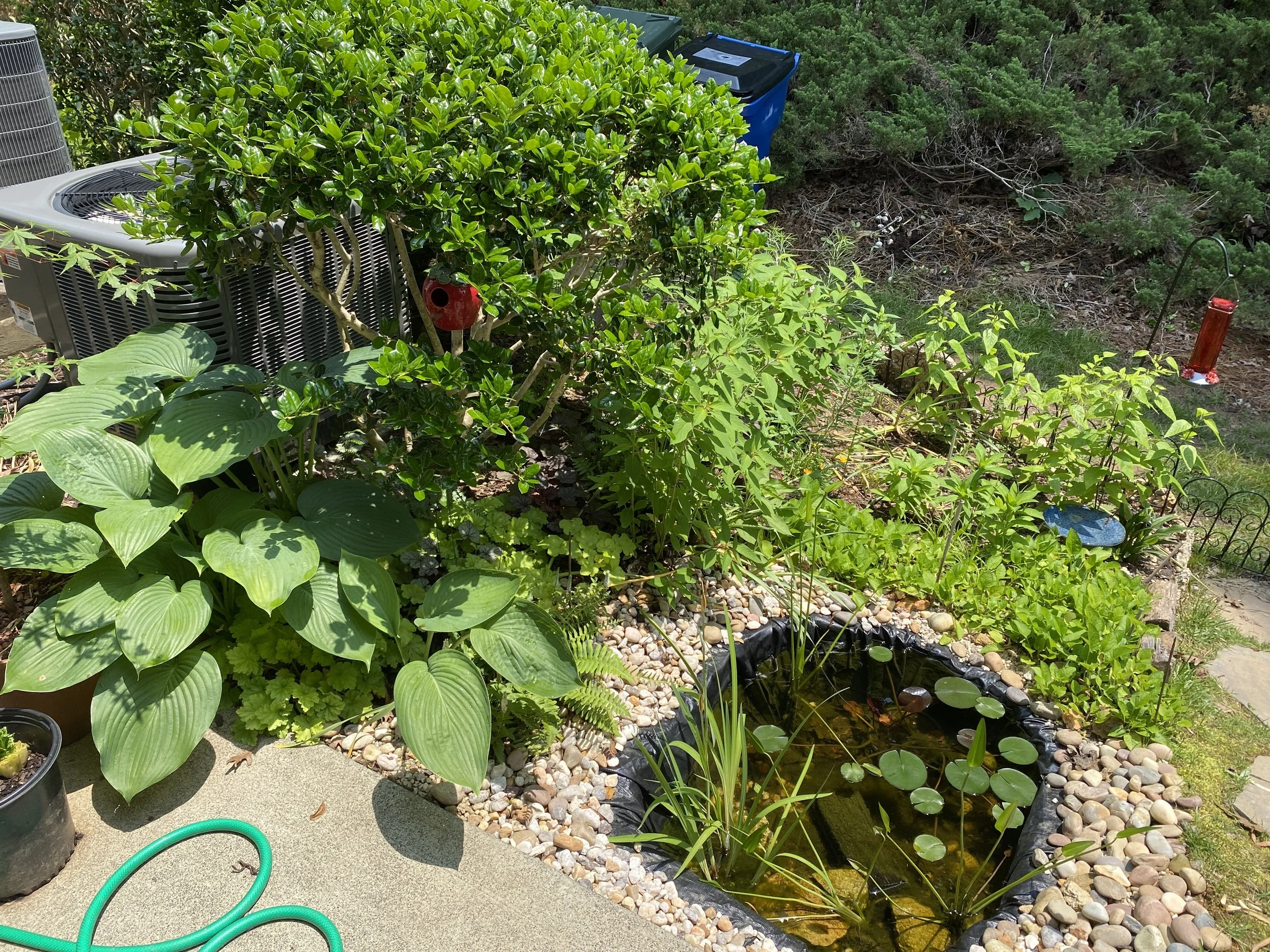
Added more plants for biodiversity, including lots of lovely ferns and partially shade-tolerant species. Now comes the hardest part: waiting for the plants to stitch themselves together and for the wildlife to notice.
CONCEPTUAL DRAWINGS FOR CLIENTS
-
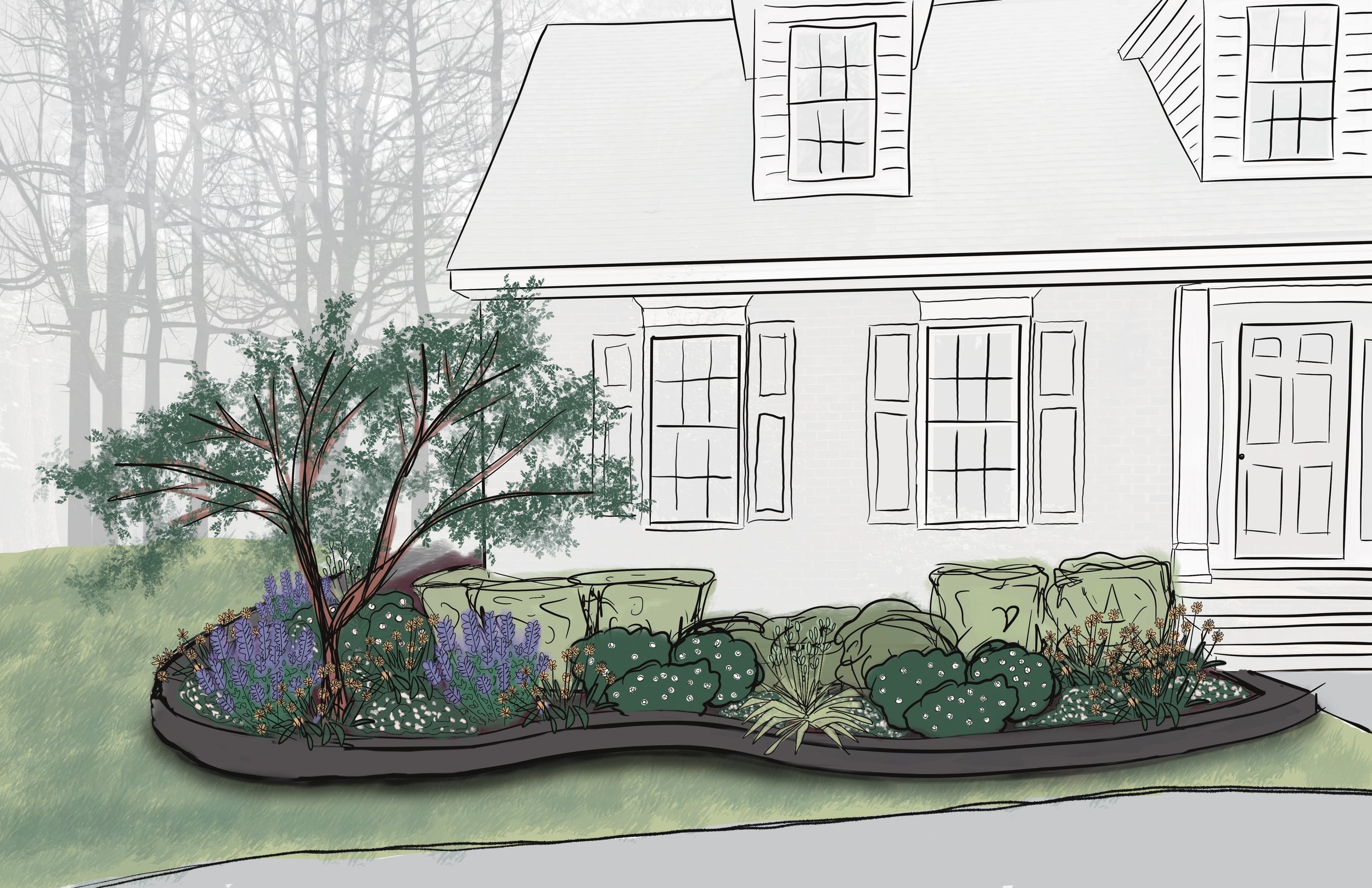
![A digital illustration of a house with a front yard garden, featuring a tree, flowering plants, and shrubs, with the house exterior sketched in black and white lines and the garden in colored details.]()
Garden Redesign
-
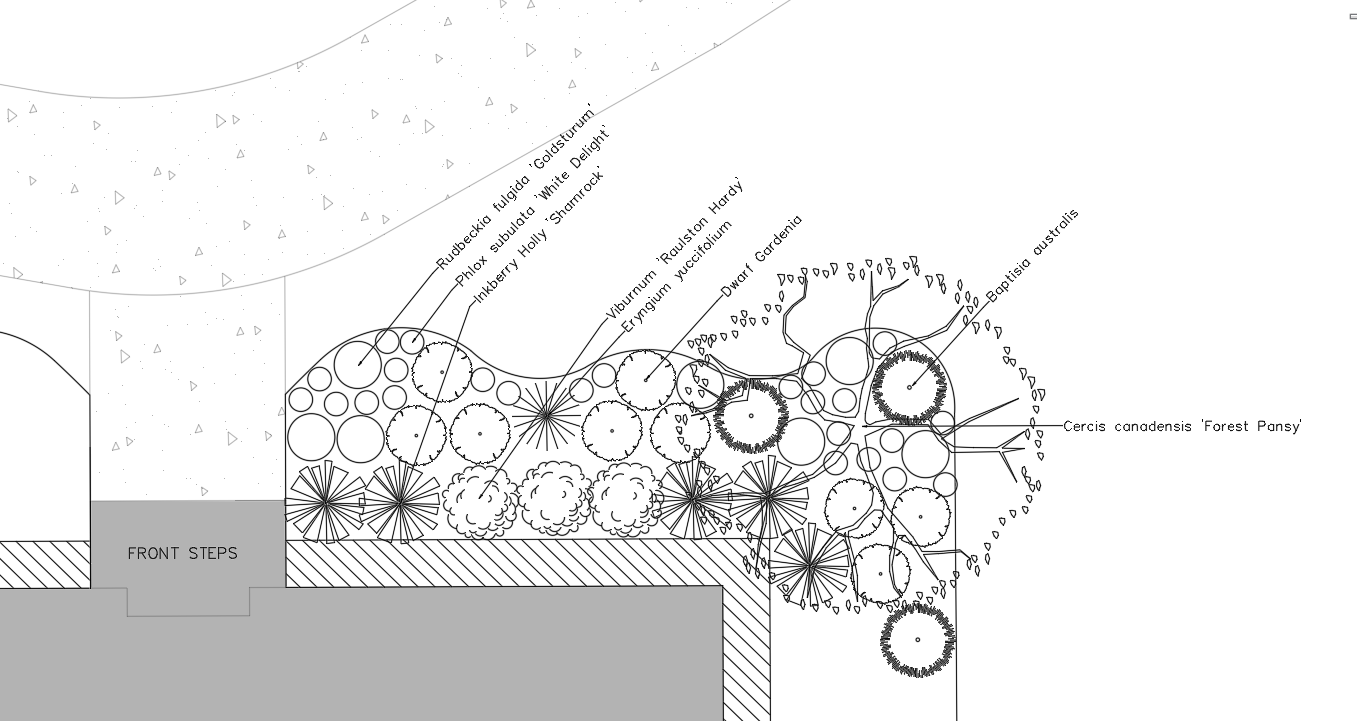
![Landscape design plan illustrating various plants and trees, including Ceris canadensis 'Forest Pansy', with front steps and pathways.]()
GARDEN REDESIGN PLAN
-
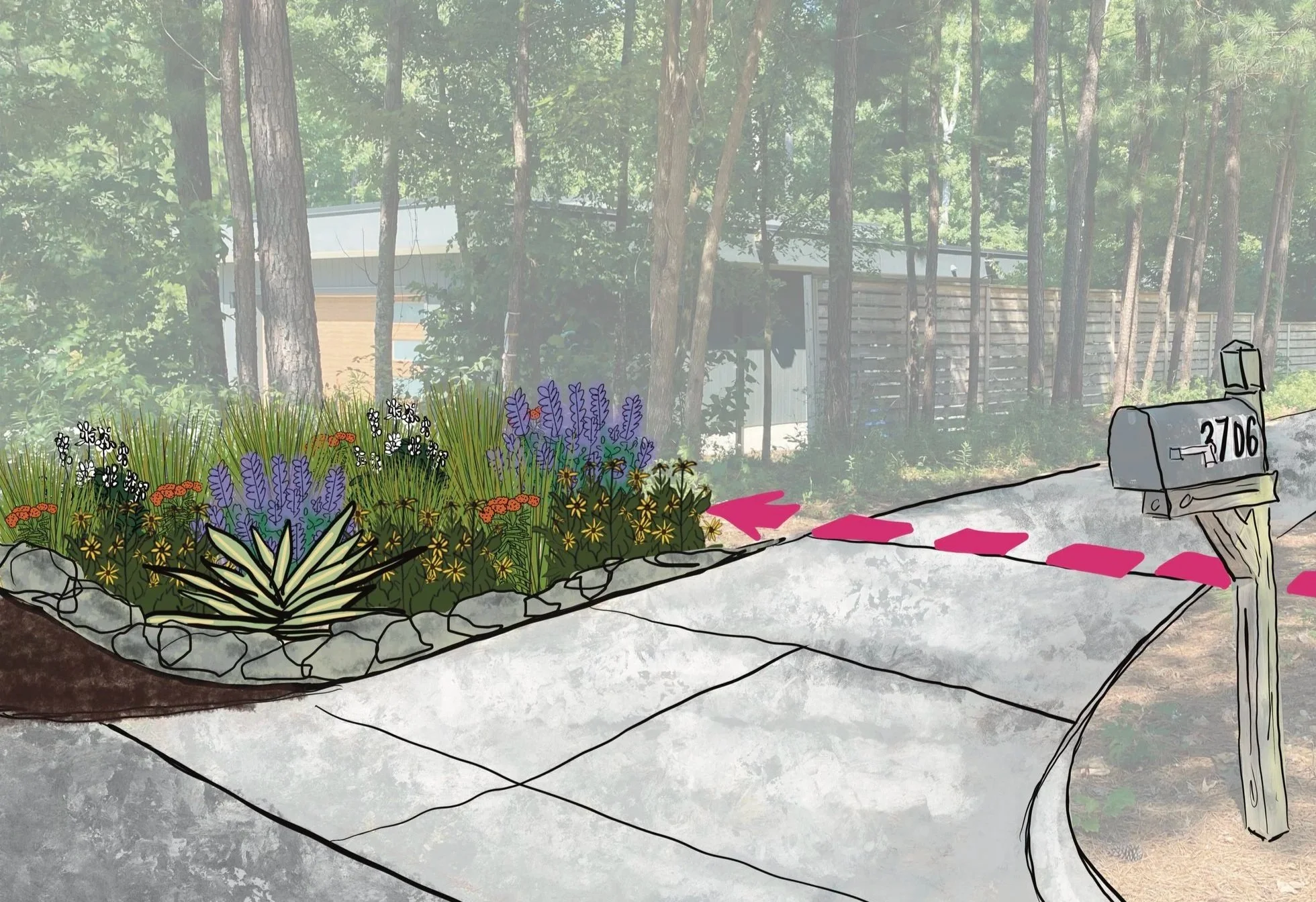
![Illustration of a sidewalk with a flower garden and a mailbox with the number 2706, in front of a wooded area with tall trees and a house in the background.]()
ENTRANCE REDO AND pRIVACY hEDGE
-
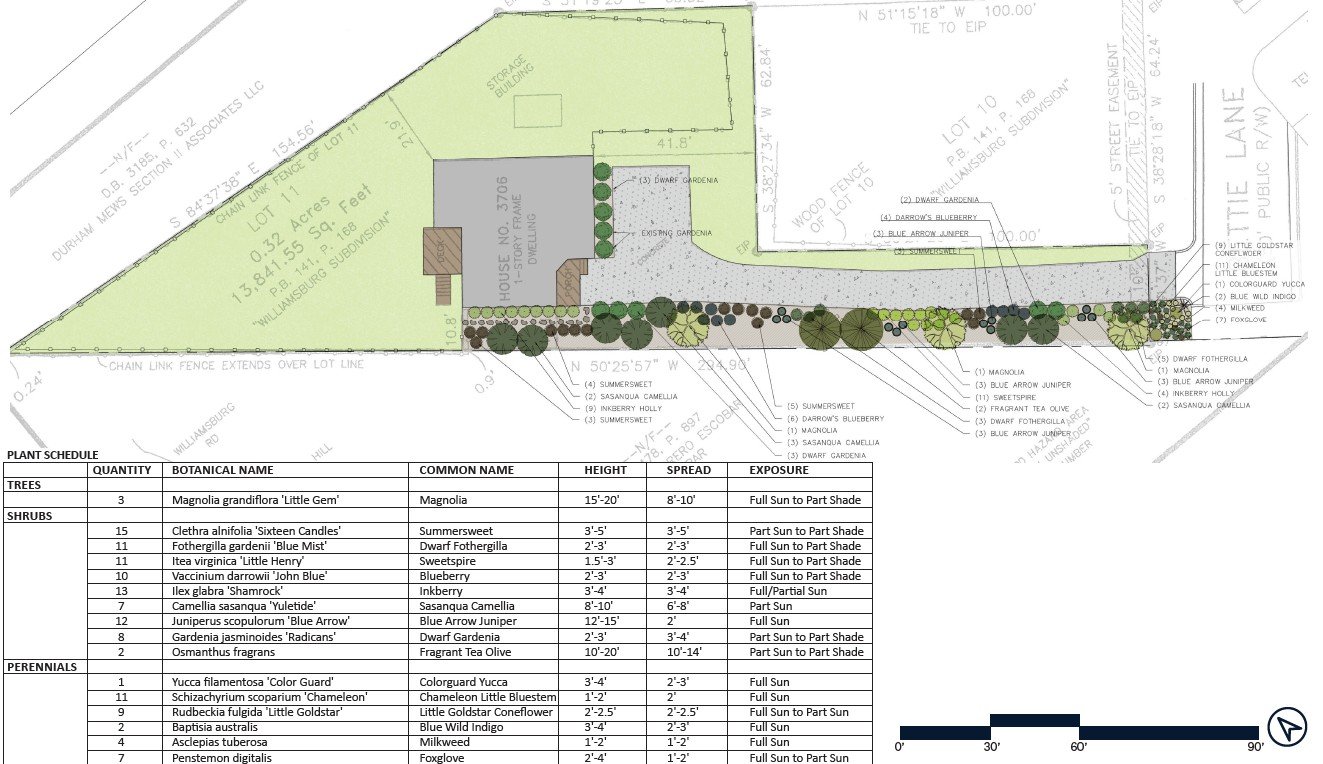
![Site plan of a landscaped yard with various trees, shrubs, flowering plants, and a house. The plan includes labels for plants like magnolia, blueberry, juniper, and camellia, along with a plant schedule detailing quantities, botanical names, common names, heights, spreads, and exposure. The yard features pathways, fencing, a storage building, and designated garden areas.]()
ENTRANCE REDO AND pRIVACY hEDGE PLAN
-
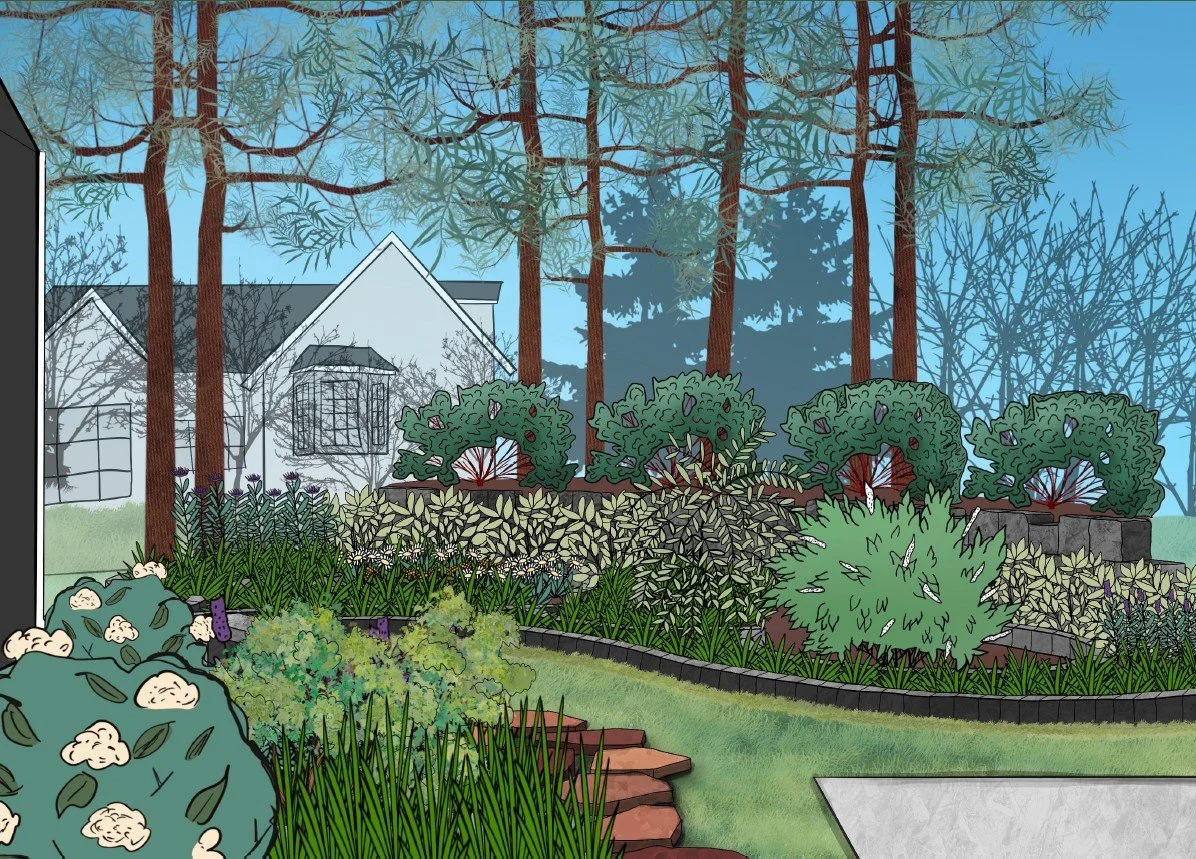
![A landscaped backyard garden with bushes, trees, and a pathway leading to a house in the background.]()
RAIN GARDEN
-
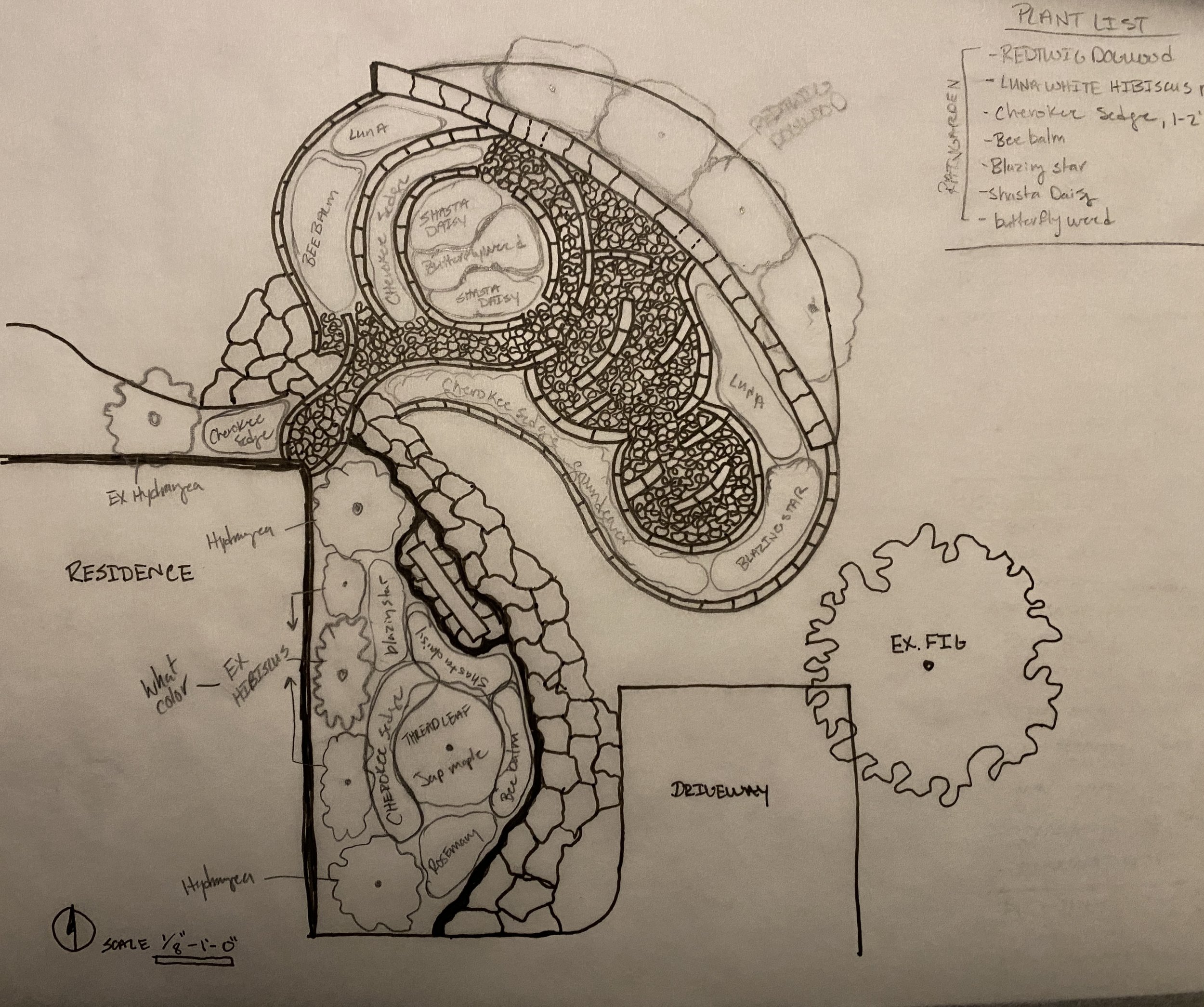
![Hand-drawn landscape garden plan with pathways, plant beds, residence, compost area, delivery area, and labeled plants like chili, lettuce, and bee balm. Note section with plant list and scale at bottom left.]()
RAIN GARDEN PLAN
-
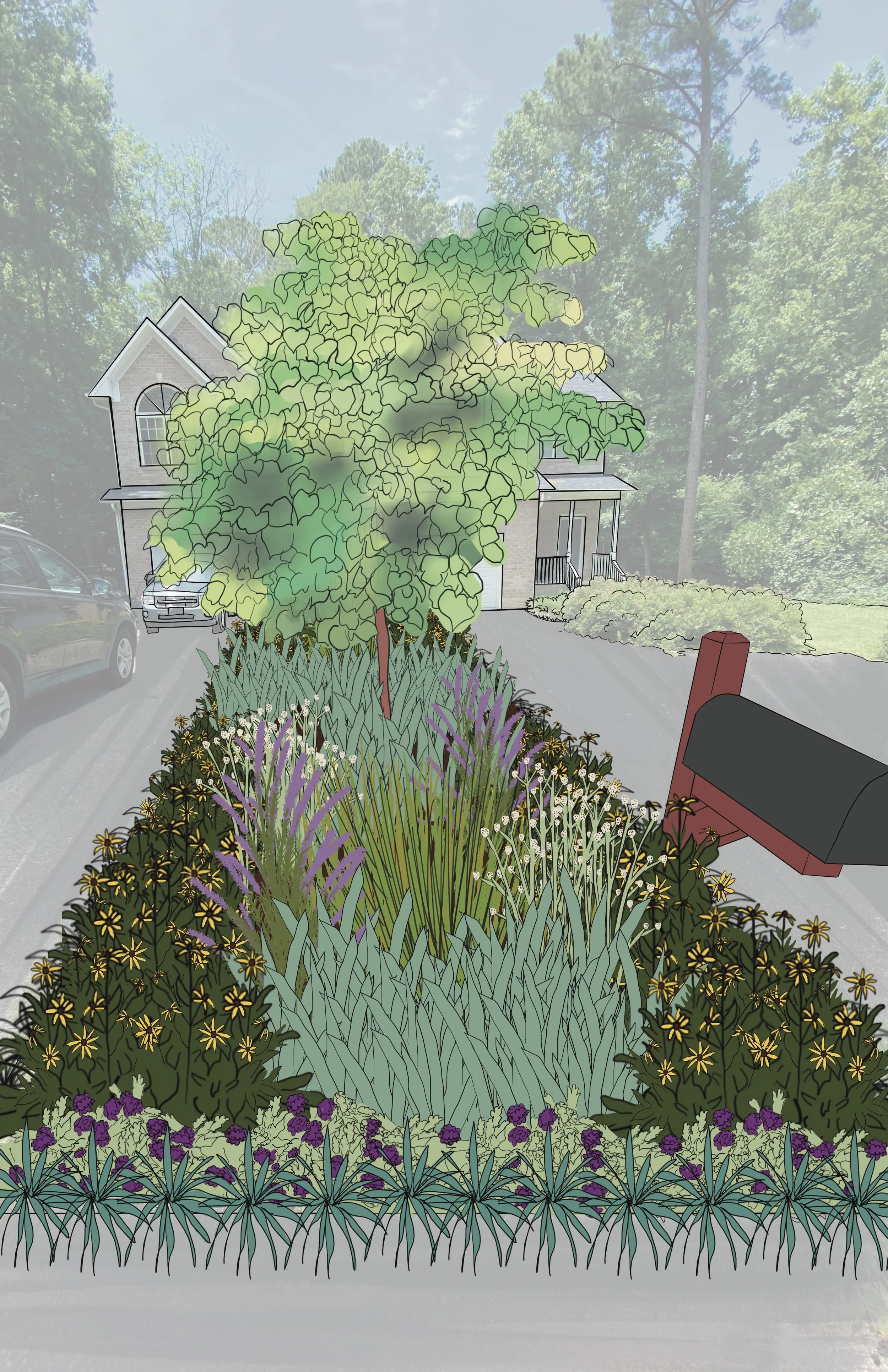
![Illustration of a house with a landscaped front yard featuring a tree, various flowering plants, and a red and black mailbox.]()
CURB APPEAL
-
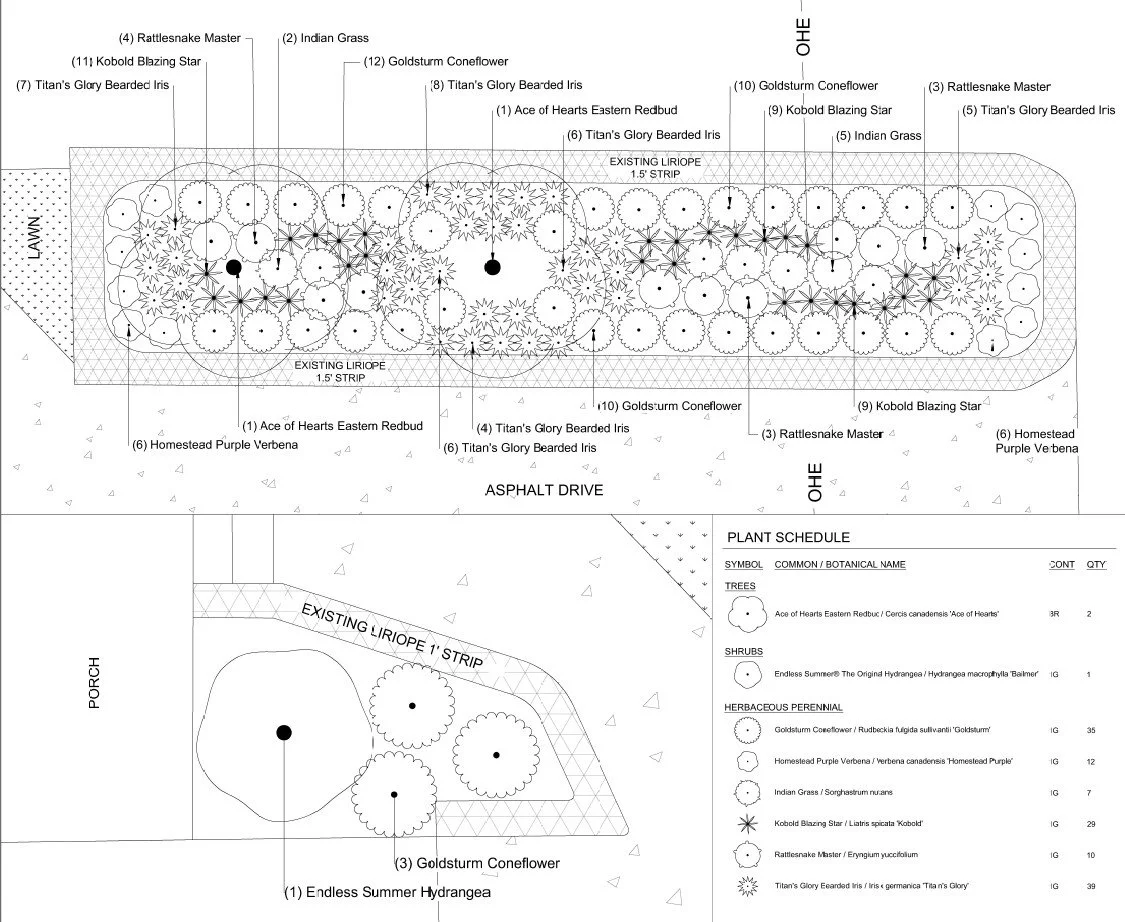
![Landscape garden plan with labeled trees, shrubs, and flowers, including a porch, asphalt drive, and existing liriope border.]()
CURB APPEAL PLAN